Reading Bulletin Boards to Keep on Your Board All Year Long

When it comes to setting up your classroom, there’s a fine line between creating beautiful walls and building intentional spaces that truly support learning. Bulletin boards are often one of the first things teachers tackle before students walk through the door—but how often do those carefully stapled displays become nothing more than background art?
Here’s the truth: bulletin boards can do more than just brighten your space. When done right, they can teach, support routines, build confidence, and grow student independence. Especially when it comes to reading. The right bulletin board isn’t just eye candy—it’s a valuable tool that reinforces the strategies and thinking skills your students need to become strong, thoughtful readers.
In fact, a well-designed reading display can promote critical thinking, boost social skills, and give students helpful cues for things like close reading and writing. These aren’t just posters—they’re anchors for classroom conversations, reading responses, and independent practice. Whether you’re working with first grade students who are just starting to build reading stamina or middle school students diving into layered texts, the right visuals can make a big difference.
And yet, a lot of times, we end up using bulletin boards as decoration or filler space. We try to change them out because we feel like we have to. But between planning lessons, supporting diverse learners, fitting in test prep, and managing all the other realities of teaching, who really has time to redo all of our bulletin boards every four weeks?
That’s Where Yearlong Reading Bulletin Boards Come In…
Instead of constantly scrambling for new content (on top of everything else you’re juggling), consider filling your wall space with tools that serve your students all year. Whether it’s the first day of school, mid-year review, or the final stretch before summer, these bulletin boards stay relevant and useful. They become quiet teaching assistants—offering reminders, strategies, and structure even when you’re not directly referencing them.
They also help create a sense of community and consistency. When your classroom is filled with clear, helpful visuals that support learning, students feel grounded. They know where to look for help. They know what’s expected. They can take ownership of their reading habits and thinking strategies—and that kind of independence is worth every square inch of wall space.
Best of all, these displays support interdisciplinary learning. The same bulletin board that supports reading responses in ELA can also guide students during social studies discussions or help them make inferences during a science unit. From turn-and-talk routines to citing text evidence, these supports carry over into other subject areas without extra work on your part.
5 Bulletin Boards that Teach All Year
In this post, I’m sharing five of my favorite reading bulletin boards—ones I use in my own classroom and that you can keep up all year long. These are not just cute; they’re content-rich, skill-focused, and helpful for a wide range of learners. From sentence stems to strategy posters, these displays are designed to make your instruction stronger every step of the way.
Each one is also available in my Teachers Pay Teachers shop, so if you’re short on time (and what teacher isn’t?), you can grab them, print, and post—without reinventing your classroom every month.
Let’s take a look at how you can make your bulletin boards work harder for you—every day of the school year.
Reading Genre Banners

Supports genre recognition, text connections, and visual cues
If there’s one reading skill students constantly revisit, it’s genre identification. This genre-themed bulletin board helps students identify and remember the difference between fiction and nonfiction genres like historical fiction, fantasy, biography, and informational texts.
Because this display is so visual, it’s accessible to students of all reading levels. It supports young learners, older students, and even English learners who benefit from clear definitions and examples.
You can use the genre posters during:
- Book shopping and independent reading
- Class read alouds
- Creative writing mini-lessons (“What genre are we writing?”)
- Cross-curricular reading in social studies (e.g., identifying a historical fiction book during a unit on Black History or Native Americans)
- Projects involving graphic arts or visual arts where students design book covers by genre
Genre discussions also provide a great opportunity to talk about author’s purpose and text structure.
Since genre is a foundational part of close reading, this bulletin board stays relevant from the first day of school to the last.
Book Talk Sentence Stems
Builds discussion skills, accountable talk, and reflection
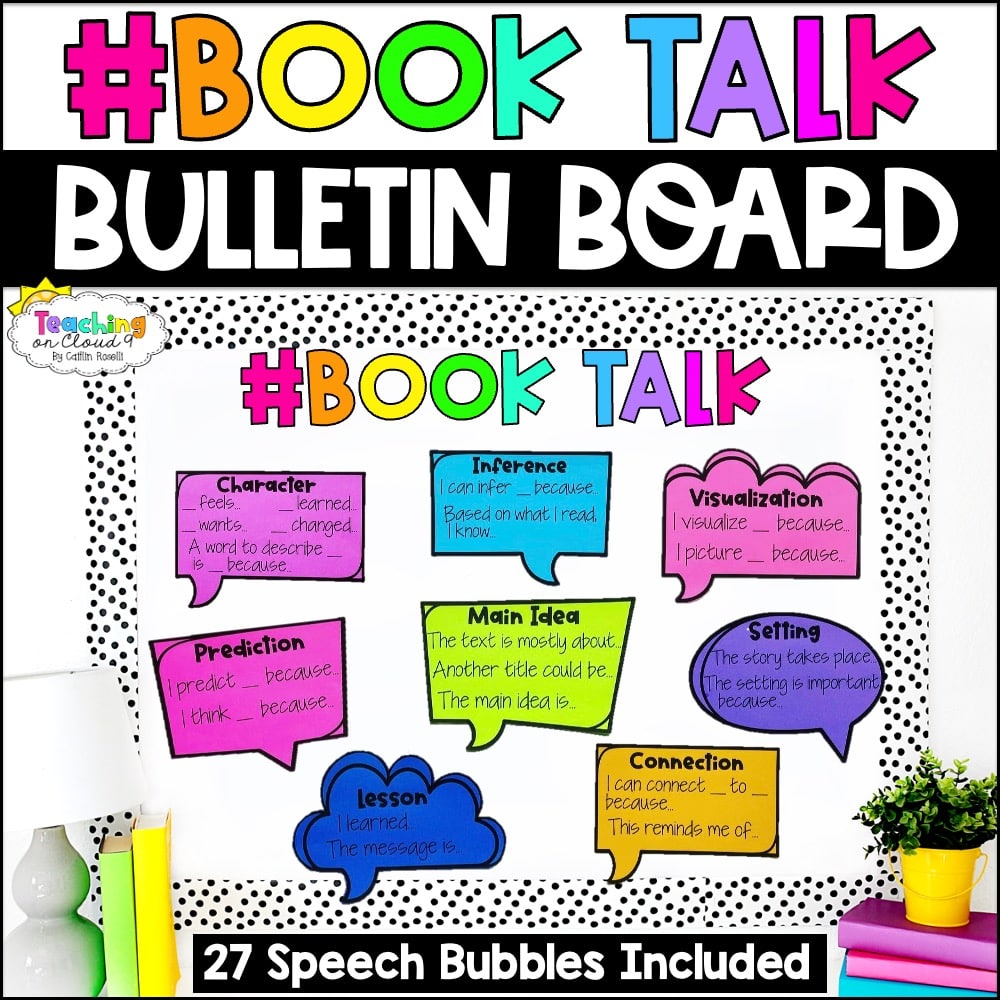
Get your students talking about books! This reading bulletin board is filled with student-friendly sentence stems that encourage deeper thinking and respectful conversation.
If you’ve ever asked your class, “What did you think of the book?” and gotten “It was okay,” this one’s for you. This reading bulletin board is a great reference for read alouds, turn and talks, independent reading, and literacy centers.
As you introduce different reading skills and strategies in your lessons you can add the corresponding speech bubble to your bulletin board so students can use the stems in their discussions. Use all or just some of the bubbles for your display. It’s one of the best ways to strengthen oral language and classroom book discussion routines.
Students can use the stems during:
- Partner and small group book talks
- Literature circles and creative writing workshops
- Reflections on mentor texts used in social studies or science
- Read aloud discussions
Once kids get comfortable with these sentence starters, you’ll hear them using them independently—even during informal conversations. And because they’re visible all year, students always have a scaffold to lean on, whether they’re talking about a new book or reviewing a favorite book.
RACE Strategy Pencil Bulletin Board
Teaches text evidence, writing structure, and paragraph organization
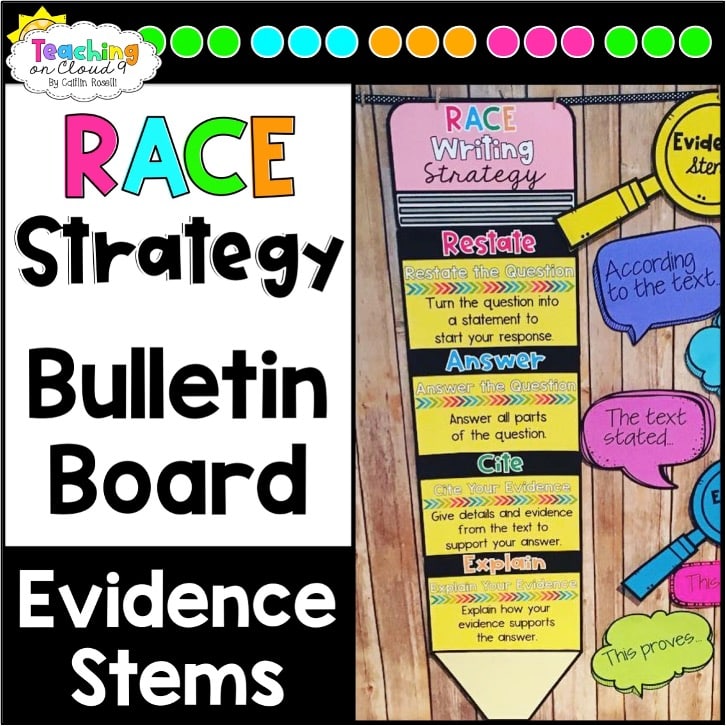
The RACE strategy (Restate, Answer, Cite, Explain) is a staple in many ELA classrooms—and this bulletin board helps your students remember those important steps to master RACE.
Because it’s shaped like a pencil, it becomes a visual anchor for written responses, and it supports everything from reading comprehension to social studies responses. The bulletin board not only includes the RACE steps but also includes evidence stems so students know exactly how to begin each sentence.
Students can use this board to write:
- Text-based responses to literature or nonfiction
- Paragraph responses to content area questions in science
- Justifying responses in social studies
This board also works in tech-based classrooms. If your students respond on Google Slides, you can even take a picture of the display and include it in the slides for reference.
And since writing with evidence is such a major part of most state and district assessments, this board earns its spot all year.
Reading is Thinking Bulletin Board

Teaches metacognition and reading strategies
This one is my go-to for teaching kids that reading isn’t passive—it’s active, engaged thinking.
The posters in this bulletin board teach students how to stop, think, and jot during reading, encouraging them to ask questions, make predictions, and clarify confusion in real time. I model these thinking strategies like questioning, visualizing, and inferring through read alouds and then give students time to practice these strategies in their own reading.
I love to have a basket with stop and think marks out that my students can grab whenever they are reading to jot their thoughts. It shows me what they are thinking and their understanding and keeps them accountable during their independent time.
Why it works so well:
- It encourages students to think about what they are reading
- It supports making grade specific connections
- It builds reading stamina and independence
- It supports English learners and students who need visual reminders
I love using this board during read-alouds, strategy groups, and independent reading time. It turns your wall into a giant anchor chart that grows with your students over the year.
It’s also great for classrooms where students do a lot of writing about reading—because it gives them tools to pull meaningful insights from the text.
Accountable Smart Talk Bulletin Board

Reinforces respectful conversations and academic language
Let’s face it: “turn and talk” doesn’t always go as planned. This bulletin board gives your students the language they need to have real, meaningful academic conversations—not crickets or just a quick whisper “I liked it” and call it a day.
My #Smart Talk Bulletin Board Set includes 26 accountable talk stems to help students to get talking. Accountable talk encourages students to speak and write in complete sentences. I model using these stems and have students practice during reading and writing workshop discussions and partner talk.
This board promotes:
- Collaboration and respectful disagreement
- Listening and speaking skills
- Use of academic language during peer feedback, class discussions, and SEL lessons
Bonus Tips: Make Your Reading Boards Interactive
To make your reading bulletin boards even more powerful, try incorporating these ideas:
- Add sticky notes or labels so students can interact with the board (e.g., label what genre their current book is)
- Use QR codes linking to book trailers or read-alouds, especially for students with diverse learning needs
- Include student-created content—let them write their own sentence stems, questions, or reading reflections
- Rotate recommended books under each genre label to keep the board fresh without redecorating
If your school uses tech platforms, you can even upload photos of the board so students can refer to them from home or during remote learning.
These tweaks create a more optimal experience for students while increasing engagement—and they still save you time.
Why Keep These Bulletin Boards Up All Year?
Tools to Grow
Here’s the bottom line: reading instruction isn’t something we do for just a few weeks of school—it’s a yearlong focus. These bulletin boards give your students the tools they need to grow as readers, writers, and thinkers across every month of the school year. The bulletin boards you choose can either fade into the background or become active tools that support this growth every single day.
Visuals that Teach
When you keep strategic, content-rich bulletin boards up all year, you’re giving your students more than decoration—you’re giving them access to visuals that teach. These displays become reliable tools in your classroom, ones students return to again and again when they need help remembering a strategy, talking through a text, or organizing their thoughts. They grow familiar. And in that familiarity, students gain confidence.
Save Time and Energy
They also save you time and energy. Once these bulletin boards are up, you’re done. You don’t have to plan a seasonal switch or rush to change things out before open house. Instead, you’ve got something on your wall that earns its space every day. These boards work quietly in the background, reinforcing the habits and routines you’re already building during your whole-group lessons, small group instruction, and independent work time.
Consistency
And maybe the biggest reason to keep them up all year is this: consistency matters. In a school year that’s constantly in motion—between curriculum shifts, schedule changes, holidays, testing windows, and everything else—there’s something powerful about having a few constants your students can count on. That kind of consistency gives your room structure. It gives your students security. And it gives you one less thing to manage.
They work because they:
- Reinforce strategies in a way that’s visible and accessible
- Support grade-specific goals without constant updating
- Encourage discussion, reflection, and independent learning
- Align with ELA standards, social studies content, and cross-curricular skills
- Help new students adjust quickly by making classroom expectations clear
- Keep reading strategies front and center—even when you’re not directly teaching them
So if you’re on the fence about what to put on your walls this year, skip the monthly fluff. Choose something purposeful. Something practical. Something that actually supports learning in a visible, ongoing way.
Ready to Make Your Walls Work for You?
Here’s where you can find the reading bulletin boards featured in this post:
- Reading Genre Banners
- Book Talk Sentence Stems
- RACE Strategy Pencil
- Reading is Thinking
- Accountable Smart Talk
These are more than decorations. They’re practical, purposeful, and powerful additions to any reading classroom.
And best of all? You put them up once—and they work for you all year long.
Do you want to help your students become RACE strategy masters when writing constructed responses? Check out this post!