The 31 Best Morning Meeting Games for Grades 2-5

A Real Teacher Morning
Ever had one of those mornings where your students come in buzzing with energy, your coffee hasn’t quite kicked in, and the idea of jumping straight into your lesson plans feels… ambitious at best?
Yep, been there. That’s exactly why I fell in love with morning meeting. They became my secret weapon for getting students engaged, talking, laughing, and most importantly—connecting. And when I added movement and community-building to the mix? Game-changer.
Morning meeting games have become such a great way to build routine and relationships. There are so many different ways to bring them to life, and adding a fun game to kick things off is my favorite trick. When students start the day with something playful and intentional, it shifts the energy of the whole room.
The Daily Juggle
As classroom teachers, we’re juggling a thousand things. We’re trying to teach social skills, incorporate SEL, keep our students’ attention, build a positive classroom community, and get through lesson plans.
And let’s be real—our kids need to move. A lot. They also need meaningful team building experiences that help them connect and collaborate.
That’s why morning meeting games that include movement and character education became my go-to strategy. It’s not just about having fun (though that’s a bonus). It’s about starting each day with purpose.
Fun Morning Meeting Games with Movement and Meaning
Here are my favorite games that check all the boxes: fun, movement, community, critical thinking, and communication. These are all things I’ve tried with real students (mostly 2nd through 5th grade), and they work beautifully in both whole class and small groups.
1. Stand If You…
This one is quick, easy, and a perfect way to get the whole class moving.
- I start by saying things like: “Stand if you ate cereal for breakfast.” “Stand if your favorite color is blue.”
- Then we get into character-building: “Stand if you’ve helped a friend this week.” “Stand if you’ve said something kind to someone today.”
- It encourages honesty, empathy, and lets kids find connections with each other.
2. Morning Meeting Scavenger Hunt
This one never fails to bring so much fun.
- I give students a list of silly-but-meaningful things to find around the classroom.
- Different categories might include: something that makes you smile, a book with a brave character, a sticky note with a kind word.
- It’s the perfect tool for combining movement, social skills, and communication.
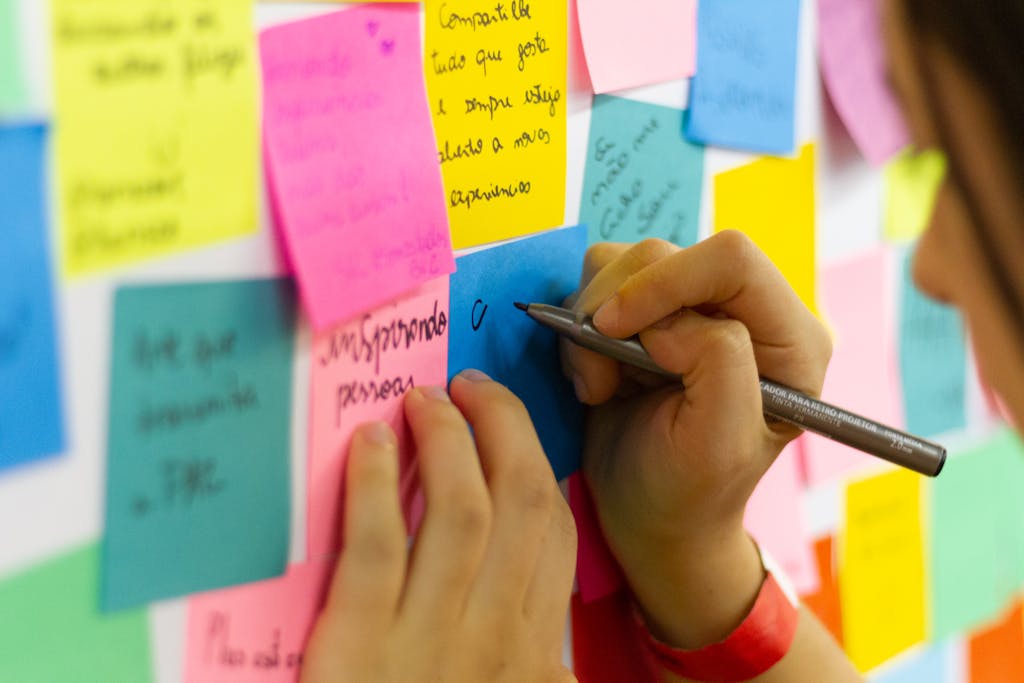
3. Pass the Compliment (Sticky Note Style)
This is community building magic.
- We use slips of paper or sticky notes.
- I model how to write a specific compliment, then pass one to each student.
- They read it aloud and pass it on.
- The energy in the room is electric by the end!
4. This or That Corners
This is a great game to get students moving and sharing opinions.
- I give two choices (e.g., cats or dogs, summer or winter).
- Students move to the side of the room that matches their answer.
- Then they talk with someone new about why they chose it.
- It builds communication skills and vocabulary while sneaking in a brain break.
5. Popsicle Stick Prompts
Such a simple but fun activity!
- I write prompts or actions on popsicle sticks: “Act like a superhero,” “Say something kind about the next person.”
- One student picks a stick and does the action or answers the question.
- It’s a fun way to start the day and build classroom community.
6. Magic Wand Wishes
Great for social-emotional learning and imagination.
- I hold a (fake) magic wand and ask, “If you could change one thing to help someone today, what would it be?”
- Students pass the wand and share.
- Their answers give a sweet peek into their character and values.

7. Minute-to-Win-It Character Challenges
These quick brain breaks also build SEL skills!
- Each challenge focuses on a character trait: teamwork, courage, respect.
- For example, build the tallest paper tower in 60 seconds with a partner.
- These are perfect for a fun Friday activity or a beginning of the year activity.
8. Good Morning Mixer
This works best in smaller teams or whole class settings with a timer.
- Each student has a card with a question: “What’s something new you tried this week?” “Who is your favorite artist and why?”
- Set a 1-minute timer and mix!
- They build vocabulary words, critical thinking, and connection.
9. Common Thread Game
This is a fun way to build teamwork and awareness.
- Divide students into small groups and challenge them to find something they all have in common (besides the obvious like school or age).
- After 2 minutes, each group shares their “common thread” with the class.
- It builds communication skills and helps students discover unexpected connections.
10. Mirror Me
A quick, movement-based game that promotes focus and empathy.
- One student leads the group in slow movements (arms up, clap, turn, etc.) while the rest mirror them.
- Switch leaders every 30 seconds to 1 minute.
- It’s a great brain break and builds self-awareness and respect.
11. Character Trait Charades
Perfect for building vocabulary and reinforcing SEL.
- Write different character traits (kindness, honesty, perseverance) on slips of paper.
- Students take turns acting one out while classmates guess.
- This one is always filled with laughter and learning.
12. Silent Line-Up
This one builds problem-solving and communication in a non-verbal way.
- Challenge your class to line up in birthday order (or height, alphabet, etc.) without speaking.
- It takes teamwork and patience—and gives quieter students a moment to shine.
13. Four Corners Feelings Edition
Put a SEL twist on a classic!
- Label four corners with different feelings: happy, sad, excited, nervous.
- Call out a situation (“You forgot your homework,” “You’re having a birthday party”) and have students move to the feeling that matches.
- Great for building emotional vocabulary.
14. Story Chain
A creative game that gets everyone thinking fast.
- One student starts a story with a sentence: “Once upon a time, there was a dancing pineapple…”
- Each student adds one sentence to keep it going.
- Fun, silly, and builds listening, speaking, and quick thinking.
15. Movement Dice
Use a large foam die or create one with different actions (jump, spin, tiptoe, etc.).
- Have a student roll the die and everyone does the action.
- Add character challenges too: “Do this movement while showing kindness!”
- It’s a perfect go-to for a quick brain break.
16. Character Compliment Circle
This one is a heart-warmer.
- Everyone stands in a circle. One student turns to the person next to them and gives a compliment using a specific character trait (e.g., “You were really responsible during cleanup yesterday”).
- Go around the circle until everyone has given and received a compliment.
- It sets a positive tone and reinforces SEL vocabulary.
17. Teamwork Tower
Ideal for small groups.
- Give each group the same materials (paper cups, index cards, tape, paperclips).
- The challenge: build the tallest free-standing tower in five minutes.
- This one is packed with problem-solving, cooperation, and laughter.
18. Kindness Snowball Fight
This one is a student favorite!
- Students write kind messages or compliments on slips of paper.
- Crumple into “snowballs,” toss for 30 seconds, then pick one up to read aloud.
- Builds connection and gets them giggling.

19. Emotion Statues
Channel that movement energy into self-awareness.
- Call out an emotion (joy, frustration, surprise).
- Students freeze like statues showing that emotion.
- Then ask volunteers to explain what their statue is showing and why. Great for empathy and self-expression!
20. Positive Patterns
Fun and rhythmic.
- One student starts with a movement and positive word (e.g., “Clap – Kind!”).
- Next student repeats it and adds their own (“Clap – Kind! Stomp – Brave!”).
- Keep going as long as the class can remember the chain!
- It’s a mix of memory game, movement, and affirmation.
21. Values Voting
Spark meaningful discussions and quick movement with this simple game.
- Post four values or character traits in the corners of your room (e.g., honesty, courage, kindness, responsibility).
- Pose a scenario or question like, “Which value is most important when playing a team sport?”
- Students move to the corner with the value they believe is most important.
- Invite volunteers to explain their thinking.
- This activity builds vocabulary, decision-making, and respect for differing opinions.
22. SEL Freeze Dance
Play music, and when it stops, students answer a character-ed prompt like, “Share a time you were a good friend.”
- It combines movement with social-emotional reflection.
- Fun + reflection = win-win.
- Great for: Movement, quick engagement, and vocabulary building.
23. Chain of Gratitude
Create a growing display of positivity!
- Each student adds a link to a paper chain, writing something they’re grateful for or a kind act they witnessed.
- Over time, the chain becomes a visual reminder of your classroom’s shared values.
- Great for: Building gratitude, reinforcing positive behavior, and visual SEL connections.
24. Kindness Spy
Celebrate the quiet acts of awesome.
- Choose one student each day to be the “Kindness Spy.”
- Their job? Notice kind actions throughout the day.
- At the next morning meeting, they share what they observed (with permission).
- Great for: Noticing positive behavior, building observation skills, and spreading joy.
25. Sticky Note Story Starters
Let creativity fly with this writing warm-up.
- Write short story prompts on sticky notes.
- Let students pick one to kick off a silly or thoughtful tale.
- Can be done as a whole class or in small groups.
- Great for: Creative thinking, oral language, and fun starts.
26. Classroom Connections Web
Watch your classroom community grow—literally.
- Sit in a circle with a ball of yarn.
- One student shares something about themselves, then tosses the yarn to someone who relates.
- Keep going until everyone is connected.
- Great for: Visual connection, empathy, and building community.
27. Emoji Emotions
Use visuals to talk about feelings.
- Show printed emojis or draw them on the board.
- Ask students to pick one that matches how they’re feeling.
- Let a few volunteers share why.
- You can also use emoji cards in a grab-and-share format.
- Great for: Emotional vocabulary, SEL check-ins, and empathy.
28. Trait Toss
Use a beach ball or soft foam ball labeled with character traits.
- When a student catches it, they share a time they showed or saw that trait.
- You can also theme it seasonally—like “gratitude” in November.
- Great for: Quick brain break, reflection, and character vocabulary.

29. Step In/Step Out
Help students see what they have in common with their classmates.
- Arrange the class in a circle and choose one student to kick things off with a personal statement like, “I’ve traveled to another state,” or “I like reading graphic novels.”
- If others relate, they take a step toward the center. If not, they step back.
- Keep the rhythm going for 4–5 rounds, rotating who shares each time.
- Great for: Movement, shared experiences, and quick team bonding.
30. Back-to-Back Share
Perfect for students who are shy about eye contact but still want to connect.
- Pair students up and have them sit or stand back-to-back.
- Ask a prompt like “Share something that made you smile this week.”
- After sharing, they turn and thank each other before switching partners.
- Great for: Communication, empathy, and safe sharing.
31. Memory Circle
Build community and sharpen memory—all in one go.
- Students sit in a circle. The first student says their name and something they like (“I’m Mia, and I like music”).
- The next student repeats the first student’s response, then adds their own (“That’s Mia, she likes music. I’m Aiden, and I like art”).
- Keep going around the circle—challenge the last person to remember everyone!
- Great for: Name recognition, listening skills, and team bonding.
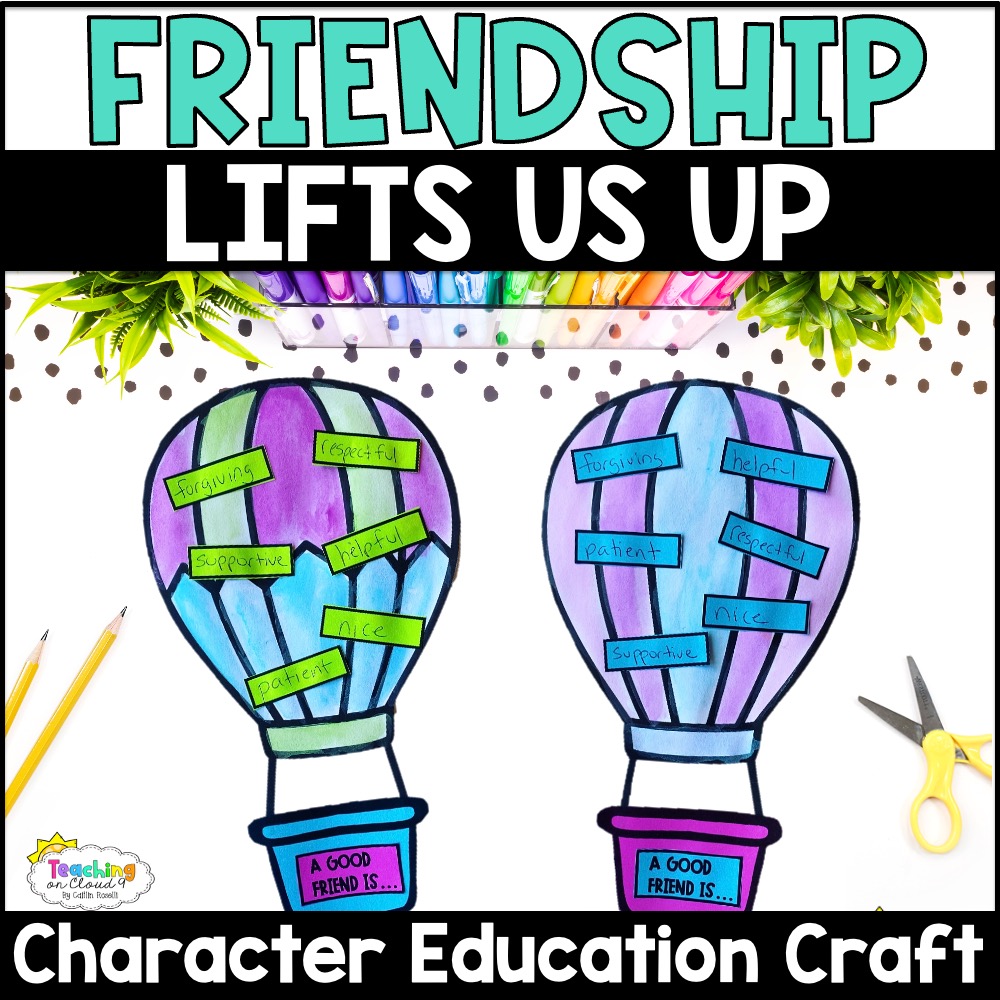
Friendship SEL Character Education Craft and Morning Meeting Slides
Want to keep the friendship-building momentum going? Grab my free friendship craft! It’s low-prep, high-impact, and pairs perfectly with these morning meeting games. It also includes a free week of morning meeting slides. Get it here.
Character Education Slides and Crafts for the Entire School Year
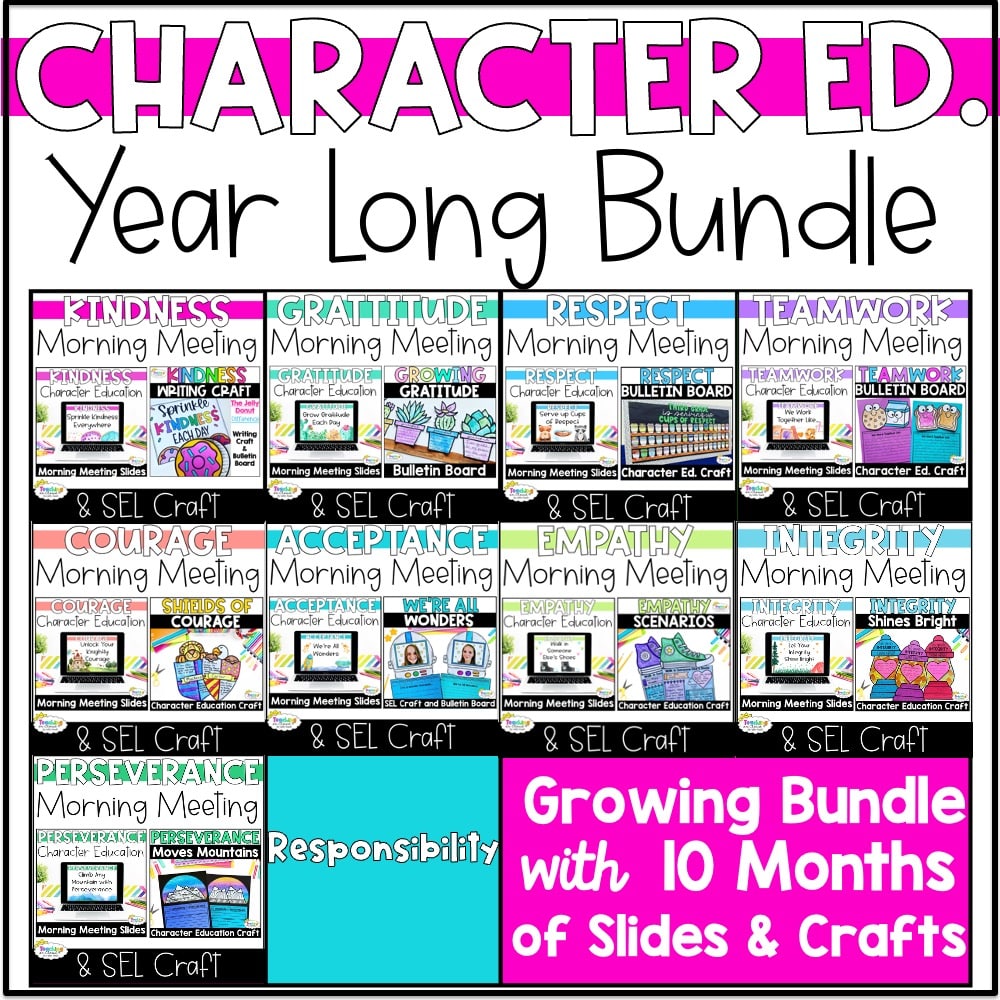
If you’re loving the energy and connection these games bring to your classroom, you’ll absolutely adore my Character Education Morning Meeting Lesson Slides + SEL Crafts Bundle. It’s packed with ready-to-use resources that take all the guesswork out of planning.
Each month focuses on a different character trait—like kindness, respect, perseverance, and more—and includes:
- Editable Google Slides for each morning
- Printable and digital SEL crafts
- Discussion questions that deepen understanding
- Built-in movement breaks and community builders
This bundle is a perfect tool for creating a strong classroom culture without spending your Sunday night prepping. It’s teacher-tested, student-approved, and aligns beautifully with everything we’ve talked about in this post.
Grab the bundle here and make your mornings magical.
Make Morning Meetings Meaningful in Your Classroom
There you have it—21 fun, movement-packed morning meeting games that don’t just fill time… they build something. They build relationships, confidence, communication, and a classroom culture you’ll be proud of. These fun morning meeting games help students build social skills, move their bodies, and start the day on a positive note.
Whether you try just one game tomorrow or rotate through these all year long, the most important thing is that you’re showing up with intention. Your students feel it. And they’ll remember it.
Which game are you trying first? Or better yet—what’s your go-to? Let’s swap ideas in the comments!
Are you looking for some meaningful SEL read alouds to add to your morning meeting? Check out my blog post, Top Children’s Picture Books for Social Emotional Learning here.
Looking for read alouds to add to your morning meeting that help build your classroom community?
Check out this post:
TOP CHILDREN’S PICTURE BOOKS FOR SOCIAL EMOTIONAL LEARNING